
Contamination control is one of the most critical priorities in laboratory environments. Whether in research labs, pharmaceutical facilities, medical laboratories, or regulated cleanrooms, even microscopic contaminants can compromise accuracy, affect safety, and trigger compliance issues. Contaminants can distort research findings, reduce product quality, and increase risk to personnel, especially when contamination goes undetected.
That is why professional laboratory cleaning plays an essential role in contamination prevention. Through specialized protocols, validated tools, and trained technicians, professional teams help laboratories maintain clean, controlled conditions that support consistent results and safe daily operations.
Understanding Laboratory Contamination
Laboratory contamination refers to the unwanted presence of biological, chemical, or particulate matter that interferes with experiments, equipment performance, or safety conditions. Contaminants can enter a laboratory through foot traffic, air circulation, poor surface maintenance, shared tools, spills, and improper handling.
A key challenge is that contamination is not always visible. While spills or dust buildup may be easy to spot, many high-risk contaminants, such as microbial particles, chemical films, and ultra-fine dust, are invisible. This makes structured cleaning procedures and environmental control critical in every lab setting.
Common Types of Laboratory Contaminants
Laboratory contaminants can take many forms, ranging from microbial threats to chemical residues and airborne particles. While some contamination is easy to spot, many high-risk contaminants are microscopic and can spread quickly through shared equipment, airflow, and routine lab activity. Understanding the most common contamination types helps laboratories build more effective cleaning and prevention protocols.
Biological Contaminants in Laboratory Cleaning
Biological contaminants include bacteria, viruses, fungi, and mold spores. These contaminants can enter through human contact, airborne transfer, contaminated equipment, or improper waste handling. In environments involving cultures, clinical samples, or sterile processes, biological contamination can quickly invalidate experiments and increase exposure risk to personnel.
Chemical Contaminants – Cleaning and Safety Control
Solvent residues, chemical fumes, spills, and cross-contamination between experiments are considered chemical contaminants. These contaminants may settle on benches, floors, equipment housing, cabinet interiors, or inside ventilation pathways. In many labs, chemical residues are particularly dangerous because they can remain active long after an experiment ends.
Particulate Contaminants and the Role of Cleaning Equipment
These are contaminants like dust, fibers, debris, and microscopic metal particles. Although these may appear minor, they can interfere with analytical instruments, contaminate samples, disrupt optical measurements, and accelerate equipment wear. In sensitive environments, particulates can also contribute to airflow blockage and HVAC strain.
Cross-Contamination: Why It Is a Common Lab Risk
Cross-contamination refers to the unintentional transfer of substances between samples, tools, storage zones, or work surfaces. It commonly occurs when cleaning routines are inconsistent, personnel are not trained on contamination control behavior, or equipment is reused without proper wipe-down procedures.
High-Risk Areas for Contamination in Laboratories
Contamination tends to accumulate in zones with high contact, frequent airflow movement, or repeated equipment use.
Workbenches and Countertops: The Highest-Contact Surface Zone
Workbenches are used constantly for sample handling, weighing, chemical preparation, and device placement. Because of frequent exposure, benches easily collect biological residue, chemical films, and particulate matter. Even when a bench looks clean, invisible contaminants may remain and interfere with sensitive testing.
Laboratory Equipment and Instruments: Where Contaminants Cause the Most Damage
Instruments such as microscopes, centrifuges, diagnostic systems, analyzers, and sensors can be highly sensitive to dust, residue, and microbial contamination. Contaminants can accumulate in vents, around control panels, or at contact points where operators frequently touch the equipment.
Floors, Walls, and Ceilings: Often Overlooked Contamination Collectors
Floors naturally collect dust, particles, and debris from daily movement. Over time, this contamination can become airborne again through airflow, foot traffic, and equipment vibration. Walls and ceilings may collect particles near vents, corners, and fixtures, contributing to contamination drift.
Storage Cabinets and Shelving: Hidden Sources of Cross-Contamination
Storage areas often contain containers, labware, reagents, and equipment accessories. Dust buildup inside cabinets can transfer to stored items and then be reintroduced into clean workspaces. If chemical residues are present, stored items may be exposed to harmful vapors or micro-contaminants over time.
HVAC Vents and Filters: Airflow as a Contamination Pathway
HVAC systems can become a continuous contamination pathway if vents, ducts, and filters are not properly maintained. Dust, fibers, and particulate matter can circulate back into workspaces and settle on critical surfaces or samples.
Impact of Laboratory Contaminants
Even minor contamination can lead to serious consequences in laboratory environments. Contaminants can distort test outcomes, damage sensitive instruments, compromise product quality, and create health hazards for personnel. In regulated labs, contamination also increases the risk of audit failures and operational disruptions, making contamination control essential for long-term reliability.
Effect on Research and Test Accuracy: When Data Integrity Is Compromised
Contamination can lead to invalid results, inconsistent corrosion rates, false positive/negative readings, and repeat testing. In regulated environments, poor data reliability is a major issue because it affects traceability and credibility. Even minor contamination can force labs to discard samples or redo entire test sequences, adding delays and unnecessary cost.
Health and Safety Risks: Exposure That Endangers Personnel
Contamination increases the risk of personnel exposure to hazardous chemicals, infectious materials, and harmful residues. Biological contaminants increase infection risks, while chemical fumes and residue buildup can lead to irritation, respiratory risk, or skin contact hazards. Poor contamination control can also contribute to unsafe waste handling conditions.
Regulatory and Compliance Consequences: Audit Failure and Operational Disruption
Many laboratories operate under strict frameworks such as ISO, GLP, GMP, or biosafety standards. If contamination levels exceed acceptable thresholds or if cleaning documentation is incomplete, facilities may fail audits and experience work stoppages, corrective action demands, or even certification risk.
How Professional Laboratory Cleaning Prevents Contamination
Professional laboratory cleaning is designed to eliminate contaminants without introducing new risks. Unlike general cleaning, it follows controlled methods, validated tools, and lab-approved cleaning agents to reduce particles, residues, and microbial threats. By using structured SOPs and contamination-aware techniques, professional cleaning services help laboratories maintain safe, compliant, and repeatable working conditions.
Specialized Cleaning Procedures Through Risk-Based SOPs
Professional teams follow industry-specific SOPs that are built around zoning, contamination type, and risk prioritization. Instead of using general cleaning methods, technicians apply controlled procedures that support laboratory compliance requirements and reduce contamination re-entry.
Use of Certified Cleaning Equipment and Lab-Approved Agents
Professional cleaning services in laboratory environments rely on tools and chemicals selected specifically for controlled spaces. These include HEPA-filtered vacuums, residue-free disinfectants, and low-particle detergents. Using approved chemicals reduces surface film, chemical reactions, and particulate shedding.
Trained and Certified Cleaning Personnel in the Cleanroom
Cleaning in regulated laboratories and in the cleanroom requires more than just surface cleaning. Technicians must understand PPE handling, movement control, hazardous material awareness, and chemical compatibility. Certified staff also follow strict protocols that prevent accidental contamination during cleaning activities.
Controlled Cleaning Process to Prevent Re-Contamination
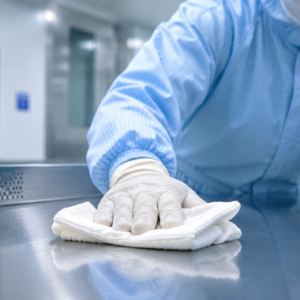
A controlled cleaning process focuses on minimizing particle disturbance, using directional wiping, and reducing airborne redistribution. Professional methods reduce contamination cycling, meaning that contaminants are not simply moved from one zone to another.
Preventive Cleaning Strategies in Laboratories
Preventive cleaning focuses on controlling contamination before it becomes a problem. This includes scheduled cleaning programs, zoning practices, proper waste handling, and ongoing validation through inspections and documentation. A structured preventive approach helps laboratories maintain consistent cleanliness, reduce rework, and support compliance requirements across daily operations.
Scheduled and Routine Cleaning Program for Consistent Control
A scheduled cleaning program reduces risk by ensuring contamination is removed before it accumulates. Frequency is based on lab activity levels, sensitivity of work, and compliance expectations.
Zoning and Access Control to Limit Contamination Transfer
Controlled zoning means separating high-risk areas from clean zones, using dedicated tools and strict procedures. Access control further reduces contamination introduced by unnecessary movement or improper entry into sensitive spaces.
Proper Waste Handling and Disposal to Prevent Secondary Exposure
Improper waste handling can reintroduce contaminants into laboratory environments. Professional cleaning services follow compliant disposal practices, especially for lab waste, chemical residue materials, and biohazard-related cleaning by-products.
Documentation and Cleaning Validation for Audit Readiness
Cleaning documentation supports traceability, accountability, and compliance. Professional providers maintain logs, checklists, and cleaning validation records that help laboratories pass audits with confidence.
Professional Cleaning vs In-House Cleaning Services
In-house cleaning staff may not have access to the required tools, training, or chemicals needed for regulated environments. Standard cleaning supplies can shed particles, leave residue, or damage surfaces. Without proper protocols, general cleaners may unintentionally spread contamination.
Outsourcing to specialists delivers consistent quality, compliance alignment, and the correct equipment, making it a lower-risk solution for laboratories handling sensitive research or regulated work.
Best Practices for Maintaining a Contamination-Free Laboratory
Maintaining long-term cleanliness requires continuous improvement and ongoing oversight. Regular inspections and audits ensure procedures stay effective, while staff training strengthens contamination awareness. Labs should also revise protocols as workflows evolve, ensuring cleaning remains aligned with changing risks.
For regulated zones, professional support is often essential for ensuring cleanroom-compatible cleaning performance and full documentation readiness.
Get Long-Term Protection with Professional Laboratory Cleaning Services
Laboratory contaminants, including biological, chemical, particulate, and cross-contamination risks, can significantly impact safety, compliance, and scientific accuracy. The most effective prevention approach combines structured cleaning procedures, certified equipment, and trained personnel.
If your laboratory operates in regulated or sensitive conditions, professional support is the safest and most effective path forward. Contact Data Clean Asia for a free consultation with our experts to explore how our laboratory cleaning and cleanroom cleaning services can help keep your facility compliant, controlled, and contamination-free.