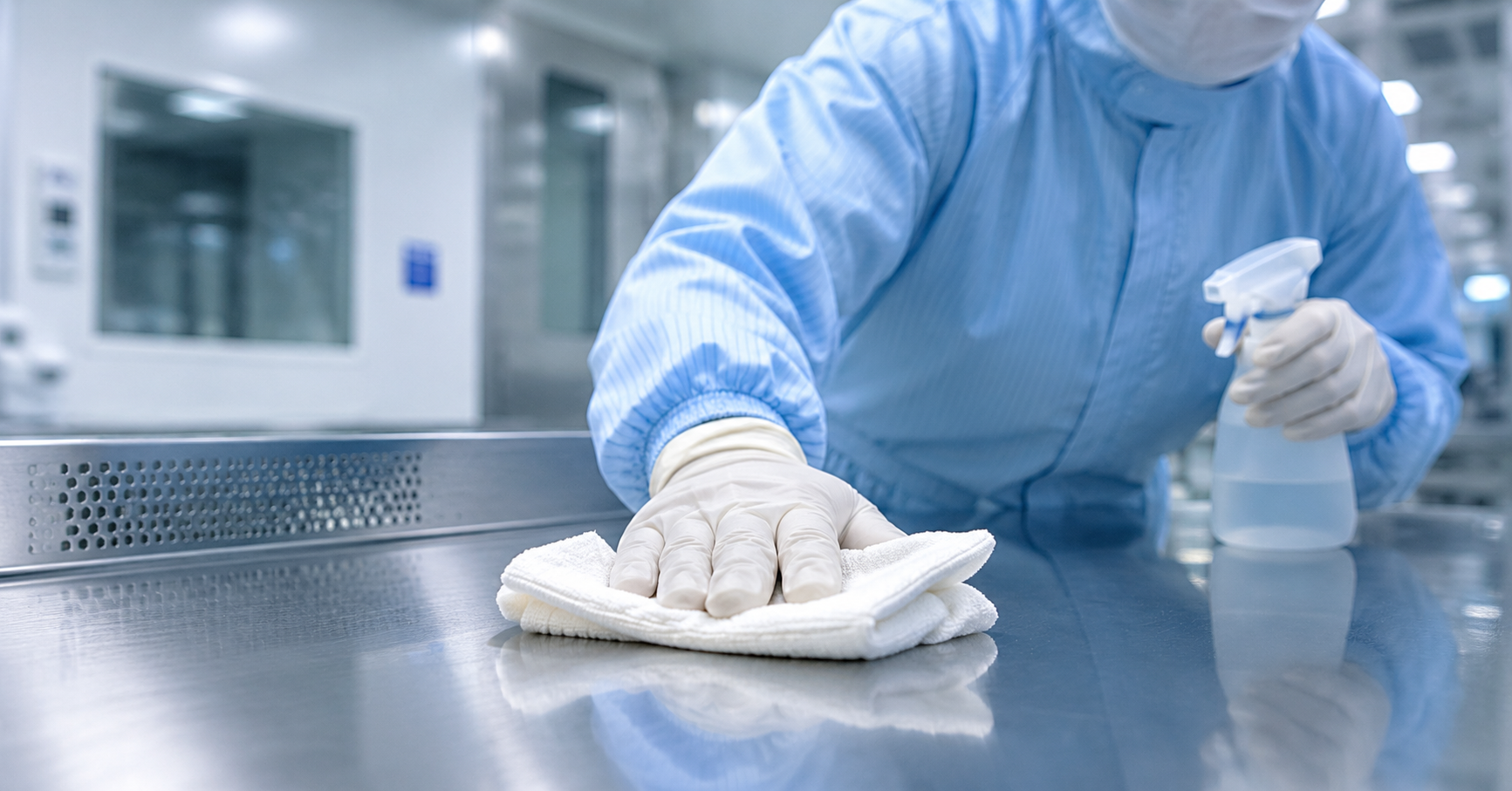
Cleanroom cleaning is essential for maintaining controlled environments where even the smallest contaminants can affect product quality, operational efficiency and regulatory compliance. While global cleanroom cleaning standards provide a strong foundation, tropical climates present additional challenges that require a more specialised approach.
In Singapore, relative humidity (RH) remains high throughout the year, typically ranging between 70% and 90% outdoors, creating ideal conditions for microbial growth, condensation and airborne contamination. Without climate-specific cleaning protocols, even a well-designed cleanroom can struggle to maintain the highest standards of cleanliness and contamination control.
This article explains why cleanroom cleaning services in Singapore require a different strategy and how organisations can protect their cleanroom facilities from humidity-related risks.
What Makes Tropical Climates Different?
Unlike temperate countries that experience seasonal fluctuations, Singapore’s tropical climate remains consistently warm and humid throughout the year. These environmental conditions directly influence how contaminants behave inside a cleanroom environment.
Consistently High Humidity
High moisture levels create favourable conditions for bacteria, fungi and mould to multiply more rapidly. Even when a cleanroom is equipped with advanced filtration systems, excessive humidity can compromise the integrity of contamination control measures if cleaning procedures are not adapted accordingly.
Warm Temperatures Accelerate Biological Activity
Heat combined with moisture accelerates microbial activity. Organic residues, cleaning agents that remain on surfaces and airborne contaminants can become breeding grounds for microorganisms if cleaning work is not carried out frequently and correctly.
Airborne Moisture Carries Contaminants
Humidity affects the movement of particles in the environment. Moisture causes microscopic particles to stick together, settle on equipment and adhere to surfaces, making them more difficult to remove during standard cleaning processes.
Why Global Standards Alone Are Not Enough
Many international cleaning protocols were developed for facilities operating in cooler, drier climates. Although ISO 14644-1 provides cleanliness standards for particle counts, facilities in Singapore often need enhanced cleaning schedules and additional moisture control measures to maintain compliance.
How Humidity Impacts Cleanroom Performance
Humidity influences every aspect of a cleanroom, from particle behaviour to equipment reliability and regulatory compliance.
Microbial Growth Acceleration
High humidity significantly increases the risk of microbial contamination if environmental controls and cleaning protocols are not properly maintained. Mould, fungi and bacteria reproduce faster in damp environments, especially around corners, equipment joints and difficult-to-access areas.
Without regular cleanroom maintenance and appropriate disinfection, microorganisms can spread rapidly, increasing cross-contamination risks and affecting both production processes and product quality.
Particle Behaviour Changes
Humidity changes how particles move within the cleanroom environment. Elevated humidity can cause particles to clump together, increasing the likelihood that they settle on equipment and surfaces rather than remaining suspended in airflow for filtration.
This makes cleaning and contamination control more challenging, particularly in critical manufacturing zones where even tiny particles can affect sensitive products.
Equipment and Surface Risks
Excessive moisture can lead to condensation on equipment, workstations and production lines. Over time, this increases the risk of corrosion, residue build-up and premature equipment deterioration.
Sensitive instruments, electronic components and testing facilities are especially vulnerable if humidity is not properly managed alongside routine cleanroom cleaning.
Compliance Risks
Maintaining cleanliness standards becomes increasingly difficult when humidity is not controlled. Elevated particle counts, microbial contamination and inconsistent environmental conditions may result in failed audits or non-compliance with industry standards.
For industries operating under strict regulatory requirements, maintaining a stable cleanroom environment is essential for continued certification.
Why Standard Cleaning Protocols Fail in Singapore
Traditional cleaning procedures often fall short when applied to tropical environments.
Designed for Temperate Climates
Many cleaning services are based on assumptions that humidity levels remain moderate. These cleaning schedules may not adequately address the challenges presented by Singapore’s year-round tropical weather.
Lower Cleaning Frequency
Standard protocols often recommend daily or weekly cleaning intervals that may not be sufficient in high-humidity environments. In high-risk cleanroom environments, elevated humidity levels may require more frequent cleaning and disinfection than standard schedules provide. Some critical areas may be cleaned on a per-shift basis or more frequently as part of a risk-based contamination control strategy.
Limited Humidity-Specific Cleaning Solutions
Not all cleaning agents perform effectively under tropical conditions. Slow-drying chemicals or products that leave residues can increase contamination rather than reduce it.
Professional cleanroom cleaning services typically use specialised cleaning solutions that dry quickly, minimise residue and provide anti-fungal protection.
Reactive Instead of Preventive Cleaning
Many facilities only increase cleaning after contamination has been detected. A proactive strategy focuses on preventing contamination before it affects operations, reducing downtime and protecting valuable products.
Tropical Cleanroom Cleaning: A Different Protocol
Successful cleanroom cleaning in Singapore requires protocols specifically designed for humid environments.
Humidity-Aware Cleaning Schedules
Cleaning schedules should be coordinated with HVAC operating cycles to ensure surfaces remain dry throughout the cleaning process.
Many facilities also avoid cleaning during periods when moisture levels are highest, helping improve cleaning effectiveness and reducing the risk of condensation.
Specialised Disinfectants
Professional cleaners use fast-drying, low-residue disinfectants with anti-fungal and antimicrobial properties. These cleaning solutions are specifically selected to perform reliably under humid conditions while protecting sensitive cleanroom facilities.
Increased Cleaning Frequency
High-touch surfaces, production equipment and critical process areas may require more frequent cleaning and disinfection in environments with elevated contamination risk .
Cleaning schedules should be based on cleanroom classification, process risk, environmental monitoring data, and operational requirements. A proactive approach helps reduce contamination risks and supports consistent environmental conditions between production cycles.
Moisture Control Integration
Effective cleanroom cleaning extends beyond surface disinfection. Dehumidification systems, HEPA-filtered cleaning equipment and environmental controls work together to minimise airborne moisture and improve cleaning performance.
Integrating moisture management into cleaning protocols creates a more stable cleanroom environment.
Staff and Gowning Adaptation
Personnel remain one of the largest contamination sources within a cleanroom.
In tropical climates, sweat and moisture increase contamination risks. Enhanced gowning procedures, moisture management practices and ongoing training programmes help ensure that staff maintain the highest standards of cleanliness during operations.
Role of HVAC and Environmental Monitoring
HVAC systems play a critical role in supporting cleanroom cleaning and contamination control.
Maintaining indoor relative humidity between 40% and 60% helps minimise microbial growth, prevent condensation and improve cleaning effectiveness.
Real-time environmental monitoring systems continuously track humidity, temperature and particle counts, allowing facilities to respond quickly when conditions begin to drift outside acceptable ranges.
Modern facility management systems can integrate HVAC controls with environmental monitoring, providing automated adjustments that help maintain cleanroom stability and compliance.
Industries Most Affected in Singapore
Several industries rely heavily on specialised cleanroom cleaning services to maintain operational reliability.
Semiconductor Manufacturing
Semiconductor production requires extremely low particle counts. Even microscopic contaminants can damage components, reduce yields and interrupt production.
Pharmaceuticals and Biotechnology
Pharmaceutical manufacturing depends on strict contamination control to protect product quality, patient safety and regulatory compliance.
Healthcare Facilities
Hospitals, laboratories and research facilities require highly controlled environments to prevent microbial contamination during medical procedures, diagnostics and scientific research.
Data Centres
Although data centres are not traditional cleanrooms, contamination control remains critical because dust accumulation can affect airflow, cooling performance and equipment reliability. Professional cleaning services help maintain operational reliability for critical infrastructure.
Case Scenario: What Happens Without Proper Protocols
Consider a pharmaceutical manufacturing facility operating during an extended period of high humidity.
Condensation develops on production equipment while cleaning frequency remains unchanged. Within days, microbial testing detects elevated contamination levels near filling stations.
Production is temporarily suspended while investigations, additional cleaning and disinfection are completed. Product batches undergo further testing, resulting in shipment delays, increased operating costs and potential compliance concerns.
A proactive tropical cleanroom cleaning programme could have identified rising humidity levels early, increased cleaning schedules and prevented costly downtime.
Why Choose a Specialised Cleaning Partner
Not every cleaning company has the expertise required for controlled environments.
A specialised cleanroom cleaning partner understands the interaction between humidity, contamination and regulatory compliance. Their team is trained to perform cleaning work using certified cleaning agents, specialised cleaning tools and validated cleaning procedures.
Experienced specialists also understand ISO 14644-1 requirements and follow documented processes that help clients maintain the highest standards of cleanliness while supporting long-term operational reliability.
Benefits of Climate-Specific Cleaning
Adopting climate-specific cleanroom cleaning protocols delivers measurable operational advantages.
- Reduces contamination and cross-contamination risks throughout the facility.
- Improves compliance with cleanliness standards and regulatory audits.
- Extends the lifespan of sensitive equipment by reducing corrosion and residue build-up.
- Supports consistent product quality across manufacturing operations.
- Minimises downtime through proactive cleanroom maintenance.
- Improves operational efficiency while protecting valuable products and production schedules.
Actionable Checklist for Tropical Cleanroom Maintenance
To optimise your cleanroom environment in Singapore, ensure that you:
- Monitor humidity levels every day.
- Increase cleaning frequency in high-risk areas.
- Use antimicrobial and anti-fungal cleaning agents.
- Inspect HVAC systems regularly.
- Verify particle counts and environmental conditions.
- Update cleaning schedules based on humidity trends.
- Train cleaners and operators on tropical contamination risks.
- Review cleaning protocols regularly to maintain compliance with industry standards.
Protect Your Cleanroom Against Singapore’s Climate
Humidity changes everything inside a cleanroom. Standard cleaning protocols developed for cooler climates often fail to address the unique challenges faced by facilities in Singapore. From increased microbial growth and particle adhesion to equipment corrosion and compliance risks, tropical conditions demand a more specialised approach to cleanroom cleaning.
By implementing humidity-aware cleaning schedules, advanced cleaning solutions, environmental monitoring and preventive cleanroom maintenance, organisations can maintain the highest levels of cleanliness, improve operational efficiency and protect product quality.
Looking to strengthen your contamination control strategy? Contact Data Clean Asia today for a professional cleanroom assessment and discover customised cleanroom cleaning services designed specifically for Singapore’s tropical environment.